


New York Hold Rates became a useful pricing case study during the first NFL preseason betting window of August 2026. The headline number was not a win-loss forecast or a team angle. It was a market-margin signal: New York mobile sportsbooks held 11.7% on about $380.8 million in handle for the week ending August 16, 2026, producing $44.5 million in gross gaming revenue during Week 1 of the NFL preseason, according to a Covers report.
For bettors focused on bankroll management, that number matters because hold is not just an operator earnings metric. It is a rough expression of how much of the wagering pool stayed with sportsbooks after results settled. A high hold does not prove that every market was overpriced, and it does not show the exact margin on any single spread, total, moneyline, or prop. It does suggest that bettors faced a tougher aggregate result during a period when preseason information can be uneven and pricing can be less forgiving.
Why New York Hold Rates Moved Higher
The first NFL preseason week sat inside a broader summer pattern in New York. Research notes showed that the statewide hold was also above 12% for the week ending August 2, 2026, and July 2026 produced an 11.4% monthly hold on $1.88 billion in mobile handle. Those figures came after June 2026 had reportedly dropped to 5.19% during the World Cup group stage before July rebounded above 11%. The supported takeaway is not that football alone caused every move. Market mix, bettor behavior, operator pricing, and event schedule all likely contributed.
New York Hold Rates And Market Mix
The operator-level spread during the week ending August 16, 2026 was notable. FanDuel posted a 12.9% hold on $128.3 million in handle, generating $16.6 million in revenue. BetMGM posted a 15.2% hold on $26.2 million in handle. The research notes also referenced operator holds ranging from roughly 5.8% to 15.2% that week. That gap is a reminder that New York Hold Rates should not be read as one uniform price across every app.
A statewide hold blends many different products: main markets, props, parlays, futures, boosts, live betting, and settlement outcomes. It also blends different customer profiles. A bettor comparing two-way markets still needs to check the actual price on the board, because a statewide revenue rate cannot tell whether a single point spread carried -105, -110, -115, or a wider effective margin.
Why Preseason Pricing Can Be Less Friendly
Preseason football has a different information structure from regular-season NFL betting. ESPN reported that sportsbooks usually need much less volume on preseason games than regular-season games, while professionals can account for 50% to 70% of preseason money in some contexts, based on an ESPN preseason betting feature. That dynamic can make books more cautious with their numbers.
Casual bettors may be less engaged with rotation plans, backup quarterback usage, and coaching priorities. At the same time, sharper bettors may react quickly to lineup information. Books can respond by shading prices, moving early, limiting softness, or offering fewer favorable promotional prices. None of that guarantees a sportsbook result. It does help explain why preseason markets can feel tighter, thinner, or less generous than a bettor might expect from regular-season NFL volume.
Bankroll Effects From Preseason Hold
For bankroll planning, New York Hold Rates are best treated as a warning about cost and variance rather than a direct instruction to avoid every market. An 11.7% statewide hold for the week ending August 16, 2026 was an aggregate result, not a fixed tax on each wager. Still, high aggregate hold means the betting pool, as a group, paid a larger realized cost during that interval.
That can affect decision-making in three ways. First, a bettor should assume preseason data is noisy. Performances by backups, rookies, special teams units, or fringe roster players may not translate into stable team ratings. Second, the price may already reflect the obvious information once it reaches a mobile app. Third, smaller public volume can mean market moves are more sensitive to informed action, especially earlier in the week.
Stake Size Should Reflect Information Quality
A conservative bankroll approach does not require a precise formula here. It does require acknowledging that poor information quality raises estimation error. If a bettor normally sizes positions based on confidence in a regular-season model, preseason markets may deserve a lower exposure cap because inputs are less stable. That is a risk-control point, not a prediction about any specific result.
Recordkeeping also matters. A short run of preseason wins can create false confidence, especially when the bet was tied to noisy assumptions. A short run of losses can push bettors toward larger recovery attempts. Both reactions can increase bankroll damage. A written log of market, price, stake, closing number, and result gives a clearer view than memory after a volatile August week.
- Compare the actual price, not just the brand. A lower-hold week for one operator does not mean every line on that app is cheaper.
- Separate main markets from props and parlays. Statewide hold can be lifted by higher-margin products.
- Track closing movement. If a preseason number moves sharply after lineup news, the entry price may matter more than the opinion.
- Keep preseason results in their own sample. Mixing them with regular-season performance can distort bankroll review.
Comparing Operators Without Chasing Noise
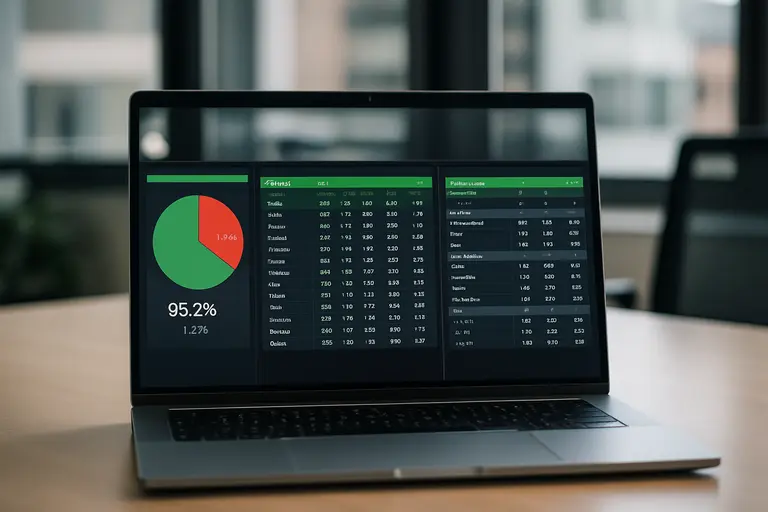
Operator comparison is still useful, but it has to be done at the market level. A bettor comparing a spread at three regulated New York books should calculate the implied probability on each side, estimate the two-way hold, and then compare the best available price. That process is more informative than reacting to a statewide revenue headline after the fact.
This is where low-juice thinking helps. The cost difference between -110 and a reduced-juice price can compound over many bets, but only if the bettor is comparing the same market at the same time. Preseason line movement can make stale comparisons misleading. A book that looked expensive at 10 a.m. may be competitive after an injury note or rotation report moves the market by mid-afternoon.
Exploring different sportsbook infrastructures, sportsbook software context provides insights into the methodologies behind market management by different operators. This broader perspective can help you understand why the same market might be priced differently across various platforms. The bettor-facing task remains narrower: identify the exact market, compare the live price, and avoid assuming that a promotion offsets a poor base number.
There is also a loyalty cost. If a bettor stays with one app out of habit, the account may miss reduced juice elsewhere or accept wider margins on props. Our related piece on bet holds and sportsbook loyalty covers how margin and convenience can interact across regulated books.
Hold Is A Signal, Not A Pick
New York Hold Rates can help bettors understand market conditions, but they should not be converted into team selections. A high operator hold from August 2026 does not identify the right side in a future preseason game. It mainly shows that pricing, product mix, and bettor behavior combined to produce strong sportsbook revenue during that reporting period.
The safer use is diagnostic. If a market type repeatedly carries wide spreads between bid and offer, high same-game parlay margin, or limited price competition, it may deserve less bankroll weight. If a mainline market has multiple books posting similar prices with lower juice, it may be easier to evaluate. Even then, the edge is never automatic; it depends on the bettor’s number being better than the market after accounting for vig.
New York NFL Preseason Hold Rates
By September 14, 2026, the August preseason reporting window was already historical data. The week ending August 16, 2026 showed an 11.7% statewide mobile hold, with certain operators above that level. That result fit a broader summer pattern in which July and early August also produced double-digit New York holds after a much lower June figure.
The practical read is cautious. New York Hold Rates during NFL preseason highlighted the cost of betting into markets where information is uneven, public participation can be lighter, and operators may price more defensively. Bettors who care about bankroll durability should respond with price comparison, smaller exposure where uncertainty is high, clean records, and a clear separation between entertainment bets and measured market positions.
High hold is not proof that no fair prices existed. It is evidence that the market, in aggregate, was expensive for bettors during that period. For a low-juice bettor, that makes preseason a useful reminder: the first question is not who will win the game, but what margin is built into the number being offered.
