


Arizona sportsbook pricing starts with a legal cost structure that directly affects margin targets, promotional budgets, and the prices bettors see on spreads, totals, props, and moneylines. For bankroll management, the key point is not that every operator prices the same way. It is that each operator works inside the same state framework, then competes on market depth, offer mix, and the amount of juice it can absorb.
Arizona’s framework is especially relevant because mobile betting dominates the state’s reported handle. In March 2026, research data showed total handle of $836,854,392, with $833,723,863 from mobile and online wagering and only $3,130,529 from retail. That means pricing pressure is mainly a mobile-market issue, not a retail-window issue. A bettor comparing Arizona books is usually comparing mobile trading decisions, tax drag, promotional limits, and risk controls in one place.
Arizona Sportsbook Pricing Under Fee Rules
Why Arizona sportsbook pricing Starts With AGWR
Arizona applies a privilege fee to adjusted gross event wagering receipts, or AGWR. The state rule sets the fee at 8% for retail event wagering and 10% for mobile event wagering, with the rule effective July 26, 2021, according to Arizona’s privilege fee rule. AGWR is not the same as handle. It is the revenue base after winnings and other allowed adjustments are accounted for.
That distinction matters for pricing. A sportsbook does not pay the fee on every dollar wagered, but it does pay on the adjusted revenue it keeps. If a market is priced too tightly for too long, the book’s gross margin can be thin before the privilege fee, technology costs, risk management, payments, marketing, and customer support are considered. If a market is priced too expensively, sharper customers can shift volume to competing operators with better numbers.
This is the central tension in Arizona sportsbook pricing: the law creates a recurring cost on retained revenue, while the mobile market creates competition on displayed prices. For bankroll managers, that means the visible line is only one part of the cost. The same spread at -110, -108, or -105 can carry a different long-run effect even before a bettor studies matchups.
Monthly Reporting And Operator Cash Timing
Arizona operators also report and submit AGWR and privilege fees by the 25th day of each month for the prior month under the same state rule. That reporting schedule does not tell bettors what a single line should be, but it helps explain why operators watch monthly hold, promo spend, and market exposure closely.
From a pricing-model perspective, timing can matter. Books may manage exposure across a calendar month, especially if promotional credits, major event demand, or unusually low hold compresses retained revenue. A bettor does not need access to an operator’s internal book to understand the implication: comparing prices across operators is more useful than assuming a single app reflects the market-clearing number.
Mobile Handle And Market Hold
March 2026 Handle Split
The March 2026 figures in the research show how mobile-heavy Arizona had become by that month. Mobile and online wagering accounted for roughly 99.6% of the reported handle. Retail handle was only about 0.4%. That split matters because the mobile fee rate is 10%, compared with 8% for retail, and nearly all wagering activity was in the higher-rate channel.
For bettors, this does not mean every mobile price is worse than a retail price. It means the dominant channel faces the dominant tax cost. Operators can still compete by offering lower-juice sides, tighter main-market spreads, deeper prop menus, or short-term promos. But those offers need to fit within the economics of a taxed, regulated mobile book.
March 2026 research data also reported gross gaming revenue of $47,628,091 and a statewide hold rate of 5.69%. The same data showed $4,755,140 in privilege fees collected by the state. Those figures are consistent with a market where the state’s retained fee is meaningful but where the hold rate was not especially high. Low hold can be bettor-friendly in headline terms, but it can also put pressure on operators to protect margin elsewhere.
Hold Rate Is Not The Same As Good Pricing
A statewide hold rate can be useful, but it is a blunt instrument. It combines many sports, bet types, customer behaviors, and operator strategies. A lower statewide hold does not prove that every market was low-juice. A higher hold would not prove that every price was poor. Same-game parlays, long-shot props, futures, and recreational bet mix can move hold without changing the main spread price much.
That is why bankroll-focused comparison should start at the market level. A bettor comparing the same game total across several regulated books can record the number, the price, and the timestamp. If one app posts 47.5 at a cheaper price while another moves to 48 with higher juice, the relevant question is not which brand is better. The relevant question is which price creates less cost for the specific position being evaluated.
Readers who track state-level margin issues may also find related pricing context in state regulation margins, especially where tax rates and operator competition interact with displayed juice.
Promotions, Deductions, And Pricing Pressure
Promo Credits Lose Tax Value
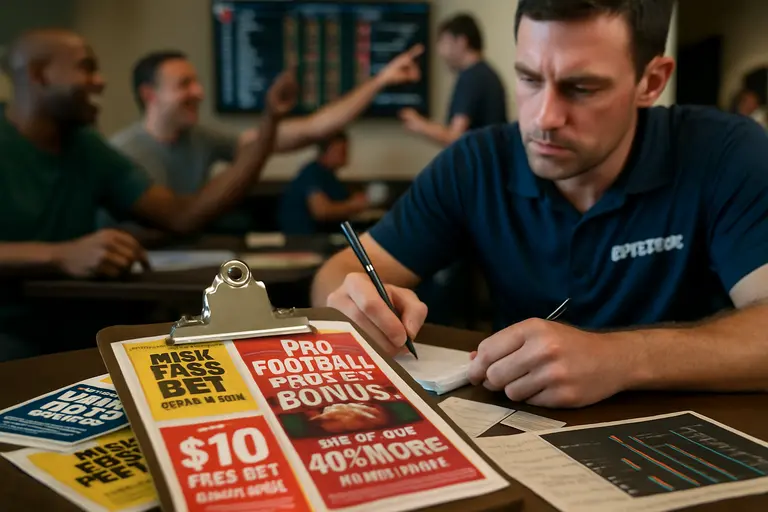
Arizona’s tax handbook describes AGWR as total event wagering receipts minus winnings paid, federal excise tax, and certain allowed free-bet or promotional-credit deductions. The promotional deduction limits decline over time: up to 20% of gross wagered in 2022 and 2023, 15% in 2024, up to 10% in 2025 and 2026, and no deduction starting in 2027, according to the 2025 Tax Handbook.
This schedule is a pricing issue, not just a tax footnote. If promotions become less deductible, operators may have less tax-efficient room to use bonus credits as a customer-acquisition tool. That can shift attention toward other knobs: main-market juice, parlay pricing, boost selectivity, limits, and the depth of available prop markets.
For Arizona sportsbook pricing, the scheduled 2027 change is especially relevant. As of September 26, 2026, operators still had a capped promotional deduction for 2026. Starting in 2027, that deduction was scheduled to fall to zero. A cautious bettor should not assume that the promotional environment before and after that date will carry the same economics for operators.
Fantasy Sports And Product Allocation
The research also notes that fantasy sports contest adjusted revenue is taxed at 5%, measured from entry fees minus payouts and weighted by in-state participation. That is a different product from event wagering, but it still affects operator allocation. A company offering multiple products can decide where to spend promotional dollars, how to shape prize pools, and where margin targets are more predictable.
For bankroll management, the practical takeaway is simple: bonuses and reduced-juice offers should be evaluated as prices, not as gifts. A promotion may lower the effective cost of a wager, but terms, eligibility, expiration, and market selection can narrow its value. Since this article is focused on legal pricing structure rather than operator-specific terms, bettors should read each regulated operator’s posted rules before treating a promotion as part of a bankroll plan.
Bankroll Signals In Arizona Sportsbook Pricing
Practical Comparison Checklist
The most useful response to Arizona sportsbook pricing is disciplined comparison. The goal is not to predict how every operator will respond to a fee rule or a tax handbook line. The goal is to measure the prices actually offered and avoid paying unnecessary margin where a better regulated alternative exists.
- Track the same market across books. Compare the exact spread, total, moneyline, or prop rather than comparing brand reputation.
- Record price and number together. A half-point move can matter more than a small change in juice, depending on the sport and market.
- Separate promos from base pricing. A boosted or credited offer should be reviewed apart from the book’s normal market margin.
- Watch market depth. More props do not automatically mean better prices, but thin markets can carry wider margins.
- Use hold rates carefully. Statewide hold is context; the bet-level price is what affects a bankroll decision.
For broader discovery across betting-related resources, BettorSearch can serve as a valuable resource in navigating the network, but it is crucial to maintain the same pricing vigilance: scrutinize each market, verify the accuracy of numbers, and perceive listings as dynamic opportunities rather than guaranteed benefits.
Why Bankroll Management Depends On Price
Bankroll management is often discussed through bet sizing, but price selection comes first. If a bettor repeatedly accepts higher juice on common markets, the cost compounds. Arizona’s legal framework helps explain why those costs exist: mobile privilege fees, promotional deduction limits, reporting requirements, and regulated product rules all sit behind the posted odds.
That does not mean regulated Arizona books are poor choices. Regulation creates reporting duties and a defined tax framework. It does mean bettors should avoid treating odds as interchangeable across apps. A market-focused bettor can log prices, identify which operators tend to be tighter in specific sports or bet types, and keep promotional value separate from true market price.
Arizona sportsbook pricing will continue to reflect both state rules and operator competition. As of September 26, 2026, the known pressure point was the scheduled end of promotional deductions in 2027. Whether that led operators to adjust promos, widen certain markets, or refine risk limits would depend on business choices and customer response. The cautious approach is to compare live prices before placing any wager and treat every extra cent of juice as a real bankroll cost.
