

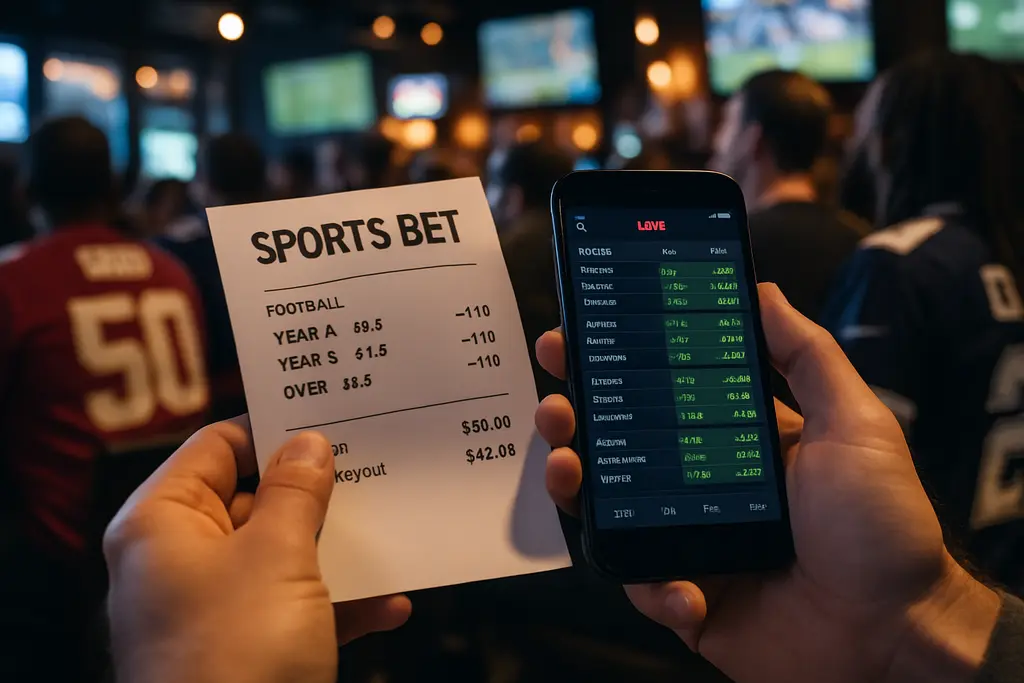
NFL juice levels are being shaped by two forces that matter to price-sensitive bettors: product mix and market competition. The shift toward parlays raises the average margin paid by customers, while sharper sportsbook comparison can still reduce the cost of individual spread, total, and moneyline positions. That does not create a certain advantage. It does mean the first strategic question is not which team to back, but which market structure and operator price carry the least unnecessary hold.
Why NFL Juice Levels Are Moving
The clearest recent signal is the growth of multi-leg betting. A large U.S. sportsbook dataset covering 547 million NFL wagers from 2018 through 2023 found that bettor contract choice changed sharply: in 2018, 66.41% of wagers were single-leg bets; by 2023, 72.51% were parlays, according to the published study on contract choice and sportsbook margins. Parlays typically embed higher house margin than single-leg markets because multiple prices are compounded and because recreational demand is high.
NFL Juice Levels And Parlay Mix
For NFL juice levels, the parlay trend matters even if a bettor mostly plays sides and totals. Sportsbooks can promote higher-margin formats heavily during NFL windows, especially where same-game parlays and player props sit near the top of the app interface. That can shift customer behavior away from relatively transparent two-way markets, where overround is easier to calculate.
A reduced-juice approach starts by separating market types. A single NFL spread at standard pricing is easier to compare across books than a same-game parlay made of correlated legs. If the strategy is built around price discipline, the lower-friction comparison usually sits in main markets first: spread, total, and moneyline. Props and derivative markets can be useful for information discovery, but they often require more caution because limits, latency, and margin can vary more widely.
Single-Leg Markets Still Need Price Checks
Single-leg does not automatically mean low-margin. Standard NFL spread and total pricing often appears around -110 on both sides, which implies a meaningful overround before any opinion about the game is considered. Reduced-juice screens are designed to identify cases where that cost is lower, such as -105 instead of -110, or where one operator is closer to the broader market than another. When seeking comprehensive insight into NFL betting strategies, this network’s related site provides a valuable resource, while reminding us that any price must still be verified at its current availability.
Overround Differences By Sportsbook
Operator-level variation is the second major trend. The research sample supplied for mid-September 2026 put BetRivers’ NFL overround at roughly 5.10% in the prior 30 days, compared with a field average near 4.79%. A separate tracker page for BetRivers vig and hold lists measured vig and hold data, with snapshots subject to update as markets move. The exact percentage can change by sport, timing, and available markets, but the practical point is stable: sportsbook selection affects the price paid.
Why Small Overround Gaps Matter
A difference of a few tenths of a percentage point can look minor on one wager. Across a full NFL schedule, repeated exposure to higher hold can become a structural drag. That is why NFL juice levels should be logged by book and market, not judged from a single screen. A book that is competitive on main spreads may be less competitive on player props. Another may post attractive totals pricing but wider moneyline splits.
Market comparison also has to account for access and liquidity. A reduced price is less useful if the limit is too small, the market disappears quickly, or the line is stale against the rest of the board. In lower-liquidity windows, especially away from marquee games, a bettor may face a choice between a better number with higher vig and a worse number with lower vig. The right comparison is probability-adjusted, not just the posted spread or total.
Reduced-Juice Math For NFL Spreads
The central calculation is simple. Moving from -110 to -105 changes the break-even win rate from about 52.38% to about 51.22%. That gap is not a prediction tool. It is a cost reduction. If a bettor has no true pricing advantage, lower juice merely reduces the hurdle; it does not make a wager profitable by itself.
NFL Juice Levels At -110 And -105
NFL juice levels are easiest to see in two-way markets because both sides can be converted to implied probability. At -110/-110, each side implies about 52.38%, and the combined market sits above 100%. At -105/-105, each side implies about 51.22%, so the hold is lower. The bettor still needs a sound probability estimate, but the price hurdle is less severe.
That distinction was visible in the 2026 NFL preseason. Week 3 concluded on August 28, 2026, and the supplied market notes described compressed spreads, with nearly every game inside one touchdown and sportsbooks shading more through increased vig than large line movement. The site’s prior recap of NFL preseason reduced-juice markets covered that pricing pattern in more detail. In compressed markets, chasing a half-point is not always the only cost question; the attached juice can be just as relevant.
- Main spreads and totals: usually the cleanest place to measure overround and compare reduced-juice offers.
- Moneylines: useful for price shopping, but favorite-underdog splits can make margin less obvious without conversion.
- Player props: often more volatile, with wider margin and lower liquidity than core game markets.
- Teasers and parlays: require extra caution because pricing is embedded across legs and key numbers can affect the true cost.
Timing And Market Depth In NFL Pricing

Timing can affect the available hold. The supplied research notes indicate that live-betting markets and periods close to major NFL events sometimes include reduced-juice offers from regulated operators, including prices such as -105 instead of -110. Those windows can be useful for comparison, but they also carry execution risk. Live prices move quickly, and the displayed number may change before a bet is accepted.
Pre-Game Versus Live Price Quality
Pre-game NFL markets tend to have more depth near kickoff than earlier in the week, especially for high-demand games. More liquidity can tighten lines, but it can also reduce stale-price opportunities because more participants are watching the board. Live markets are different: latency, suspension frequency, and model speed can matter as much as the posted vig. A reduced price is not automatically better if the underlying number has already moved away from fair value.
Line movement signals also need context. The research notes describe reverse line movement as a situation where public ticket count leans one way while the line moves the other. That can indicate sharper money, but ticket percentages alone are not enough. A cautious process compares the move across multiple books, checks whether the price or the number changed, and avoids treating any single signal as proof.
Derivative Markets Need Extra Margin Awareness
Props, alternate spreads, alternate totals, and teaser pricing can carry higher embedded cost than the headline spread. The appeal is choice: more player outcomes, more game scripts, and more ways to express a view. The trade-off is margin opacity. A prop that moves from one number to another may also move in price, and the bettor has to evaluate both. If only one sportsbook posts a thin prop market, the apparent value may simply reflect lower market confidence rather than a pricing mistake.
NFL Betting Strategy For Juice Levels
Treat NFL juice levels as an input in the process, not the process itself. The practical workflow is to identify the market type, convert the price to implied probability, compare at least a small set of regulated books available in the relevant jurisdiction, and then decide whether the lower hold is meaningful after line movement and limits are considered.
A reduced-juice strategy is most defensible in repeatable, transparent markets. Main NFL spreads and totals fit that description better than parlays and many long-menu derivatives. Parlays may be entertaining, and props may contain useful information, but the pricing burden is typically higher. For bettors focused on market cost, the discipline is to ask whether the same view can be expressed through a lower-margin single-leg market.
The recent trend is not that NFL betting has become cheaper across the board. The data points in different directions: parlay adoption has increased, sportsbook overround varies by operator, and short-term pricing can shift around high-volume windows. The implication is selective comparison. Lower juice can improve the required break-even point, but it does not remove variance, model error, or the need for responsible limits.
