

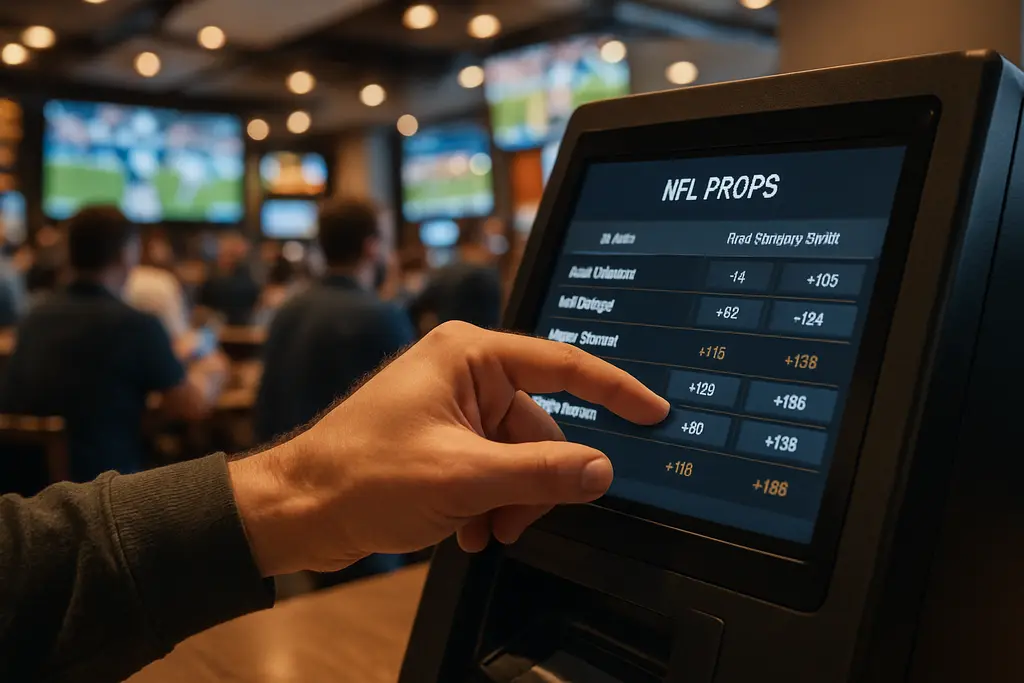
Prop Betting Pricing is one of the first market concepts new NFL bettors should understand because player props are not priced like standard spreads, totals, or moneylines. The headline number is the player threshold, such as yards or receptions, but the real cost sits in the odds attached to each side and the hold built into the market. During the NFL season, that cost can shift as injuries, roles, weather, and market demand change.
For beginners, the useful question is not whether a prop is interesting. It is whether the price is efficient compared with other books and compared with the main game markets. Props can be useful for studying player usage, but they often carry wider margins and lower liquidity than high-volume sides and totals.
Why Prop Betting Pricing Carries More Hold
Prop Betting Pricing Versus Main Markets
The key starting point is margin. A 2026 preseason and early sample from June 29 through July 27 showed average player prop margin around 7.93%, compared with about 4.77% for main betting markets, meaning the prop sample carried roughly 66% higher hold NFL prop margin data. That does not make every prop poorly priced, but it does mean the market starts from a higher-cost base.
Prop Betting Pricing is more sensitive to model disagreement because books are pricing individual roles rather than full-game outcomes. A side or total has large volume, broad analyst coverage, and usually tighter competition between operators. A player prop may rely on narrower assumptions: snap share, route rate, target share, rushing role, red-zone use, quarterback health, and projected game script.
What Higher Hold Means For Beginners
Higher hold reduces room for error. A bettor comparing two standard point spreads may see similar numbers across books. In props, one operator might shade an over, another might move the yardage threshold, and a third might leave the number unchanged but alter the price. The comparison task is not just odds shopping. It is checking whether the threshold and the juice create the same implied cost.
A simple example is enough. A rushing prop at 59.5 yards priced one way is not the same market as 62.5 yards at a slightly better price. The extra yards may matter more than the cheaper odds, depending on the player’s distribution. Since the research notes show props can carry a wider hold than main markets, beginners should treat each book’s number as a separate quote rather than assuming all props are interchangeable.
How NFL Season Timing Changes Prop Markets
Opening Windows And Availability
NFL props often open later than sides and totals because player-level information is unresolved early in the week. Practice participation, injury status, team comments, and depth-chart changes can affect the role behind the posted number. Books may also use lower limits on props than main markets because one piece of news can change a player’s projection quickly.
This timing matters during the regular season. Early-week props may reflect softer role assumptions, while later-week markets may reflect injury reports and clearer personnel expectations. That does not mean later numbers are always better. It means the market has processed more information, and the price may already include the adjustment.
Week-To-Week Movement Signals
The supplied Week 2 notes for the 2026 regular season, with the game week beginning September 13, recorded several quarterback prop moves. Jayden Daniels’ passing yards line opened at 196.5 and moved to 217.5. Lamar Jackson’s passing yards line moved from 233.5 to 213.5, while his rushing yards prop increased from 26.5 to 39.5. Those examples show how a market can reprice a player profile across categories rather than simply moving every projection in one direction.
For a new bettor, that kind of movement should be read as market information, not as an instruction to chase the latest number. A passing-yard decline paired with a rushing-yard increase may reflect opponent tendencies, expected play design, injury context, or demand from informed accounts. Without knowing the full reason, the safer process is to compare the new quote against other books and against the earlier range.
Demand, Popularity, And Market Depth
How Many NFL Bettors Use Props
Prop betting is popular, but it remains behind the main market types in stated usage. Optimove Insights reported that 32% of U.S. adult bettors planning to wager on the 2025–26 NFL season expected to use prop bets, compared with 61% for point spreads, 52% for moneylines, and 47% for totals or over-unders NFL wagering intentions report. That demand is meaningful, but the main markets still draw broader participation.
Market depth affects pricing. High-volume markets tend to be corrected quickly because more participants are quoting, betting, and comparing them. Player props can be deep for star quarterbacks, lead running backs, and top receivers, but thinner for secondary players or derivative categories. Thin markets can show wider differences because one operator may be slower to adjust or may price conservatively due to uncertainty.
Why Operator Comparison Matters
Prop Betting Pricing varies because operators manage risk differently. One sportsbook may shade popular overs. Another may shade a player because it has taken one-sided action. A third may move the line instead of moving the odds. These are different risk-management choices, and they create different costs for the same general opinion.
For broader insights on comparing sportsbooks, you can refer to Amazing Sportbooks, a related site in the network. The useful habit is consistent: compare markets by price, threshold, and access rules rather than by brand familiarity alone.
Practical Checks Before Comparing NFL Props

Build The Quote Before Judging The Bet
A prop quote has three parts: player, threshold, and odds. Beginners often focus on the player first, but price work starts with the quote. If a receiver is listed at 65.5 receiving yards at one book and 68.5 at another, the better-looking odds may not compensate for the higher threshold. If the threshold is equal, then the odds comparison is cleaner.
Use a simple checklist before treating two props as comparable:
- Match the player and stat category. Receiving yards, receptions, longest reception, and touchdown props are different markets.
- Match the threshold. A half-point or a few yards can change the distribution, especially around common player outcomes.
- Compare the odds after the threshold. A lower line with heavier juice may still be preferable to a higher line with a softer price, but that requires calculation.
- Check timing. Early-week and late-week numbers may reflect different injury and role information.
- Confirm jurisdictional access. Prop menus and eligible markets vary by regulated location.
This process keeps the focus on market structure rather than prediction confidence. It also reduces the chance of comparing two quotes that look similar but carry different costs.
Responsible Use Of NFL Prop Markets
Avoid Treating Movement As A Signal By Itself
Line movement is useful, but it is not a pick. A move can reflect injury information, limit increases, book exposure, market copying, or public demand. A number that moved strongly may be sharper than the opener, or it may be over-adjusted. Without a clear model and multiple price checks, the movement alone is incomplete.
Responsible comparison also means recognizing that props can encourage high volume because they are tied to individual players and isolated moments. A cautious approach is to track closing prices, record the book used, and separate main-market results from prop-market results. That helps show whether the bettor is paying too much hold in specific prop categories.
Prop Betting Pricing During The NFL Season
Prop Betting Pricing changes throughout the NFL season because the inputs change every week. Player health, usage, team roles, opponent matchups, and market demand can all affect the quote. The supported data also points to a clear caution: player props have shown higher margins than main markets, while fewer bettors report using them than spreads, moneylines, or totals.
For beginners, the best starting point is not a prediction model. It is price literacy. Compare thresholds, remove or estimate the juice, check more than one regulated operator, and treat every prop as a separate market. That approach will not remove uncertainty, but it gives the bettor a cleaner view of the cost being paid before any NFL prop is considered.
